

I was diagnosed with psoriatic arthritis at 28. My left knee was the first large joint to get involved, and by the time I turned 29 I was waking up every morning with a knee that felt like it was packed in concrete. I tried heat. I tried ice. I tried elevating it on a pillow and pretending the problem would sort itself out. It didn't. What actually made a dent in my daily life was a copper compression sleeve that cost less than a lunch out. I have been wearing the Copper Fit Freedom Knee Compression Sleeve nearly every day for six months now, and this is the honest account of what changed and what didn't.
This is the long-term use angle. If you want the unfiltered breakdown of what nobody mentions in the Amazon listing, that is in a separate article. This one is about the arc: what week one felt like, how I integrated it into a work routine by month one, what was still bothering me at month three, and what I actually think after month six of daily wear. I'm also going to cover the sizing situation because I ordered the wrong size first and the exchange added two weeks before I was wearing it correctly.
Quick Verdict
A genuinely useful compression sleeve for inflammatory knee arthritis, especially for morning stiffness and sustained daily wear, with real caveats around sizing and long-term fabric durability.
Amazon Check Today's Price →Your knee wakes up stiff every morning and a six-dollar ibuprofen habit is not a long-term plan.
The Copper Fit Freedom sleeve has over 23,000 reviews and a 4.2-star rating. The compression is consistent, it fits under most jeans, and the current price is low enough that sizing up or down is low-risk. If you have inflammatory knee arthritis and you haven't tried graduated compression yet, this is the place to start.
Amazon Check Today's Price on Amazon →How I've Used It: The 6-Month Timeline
I want to be specific because vague timelines don't help anyone. I live alone, work a desk job in marketing, and my physical routine involves walking my dog Cleo (a mid-sized hound mix, about 45 pounds of opinions) twice a day, taking a weekly yoga class at a studio two blocks from my apartment, and occasionally kneeling in a tiny community garden plot I share with my neighbor. None of this is athletic. All of it requires a functioning left knee.
Week one: I ordered a medium based on the Copper Fit sizing chart online. I measure 15 inches around the mid-thigh, which put me squarely in medium territory according to the chart. What the chart doesn't flag is that if you have any muscular thighs or carry extra fluid in your legs from inflammation, medium will grip uncomfortably high up the quad. By day three I had a mild pressure headache from how tight it was just above the knee. I wasn't in danger, but it wasn't comfortable either. I ordered a large and shipped the medium back.
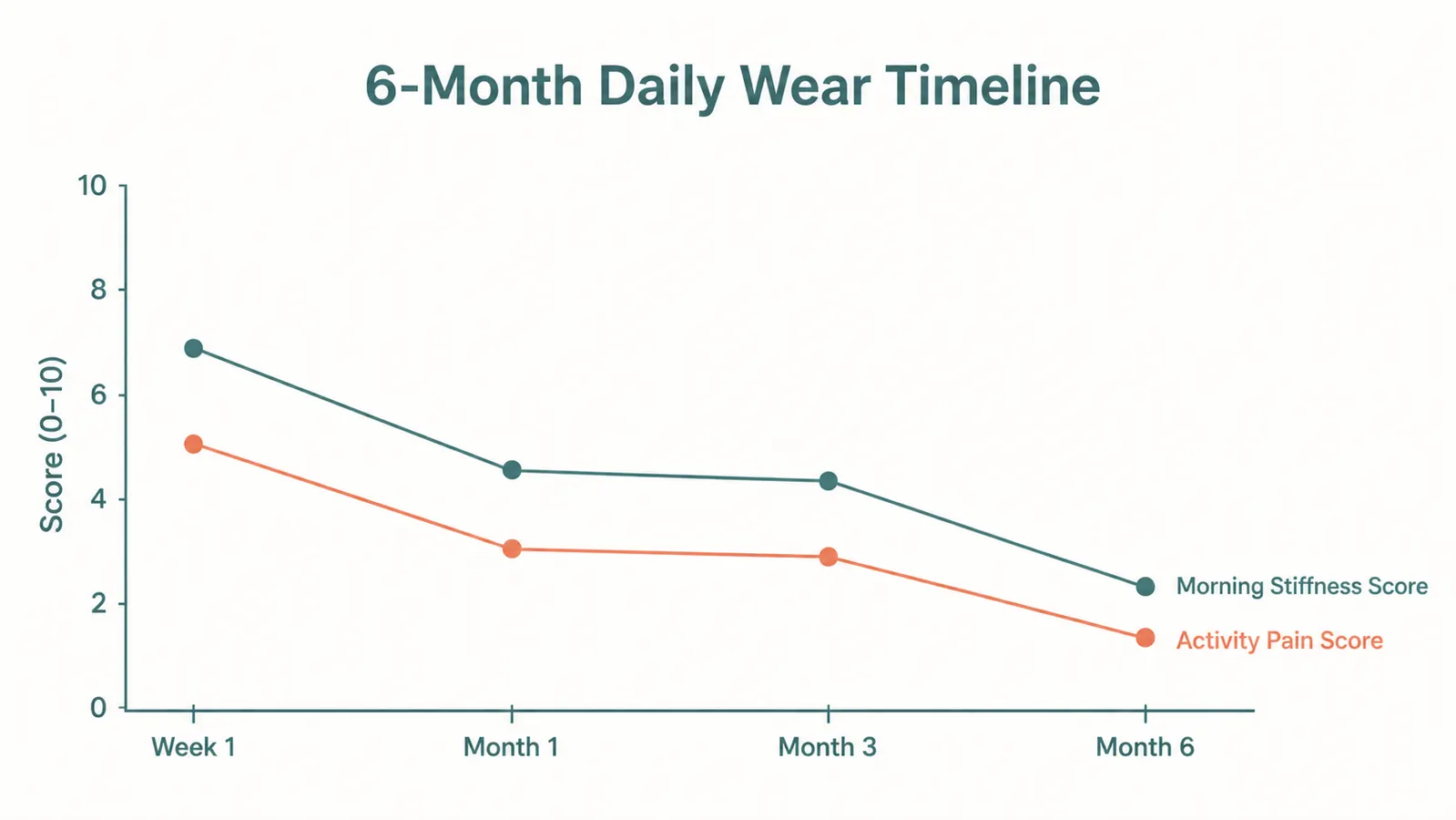
The large arrived and the fit was immediately better. The sleeve sat at the right position over my kneecap, the silicone gripper band at the top stayed put without biting into my quad, and I could wear it for four or five hours at a stretch without needing to pull it back up. Week one, with the correct size, the most noticeable effect was a reduction in morning stiffness during the first hour after getting out of bed. I started putting it on before I even made coffee. Ten minutes after pulling it on, the aching pressure in the joint was noticeably lower. Not gone. Noticeably lower.
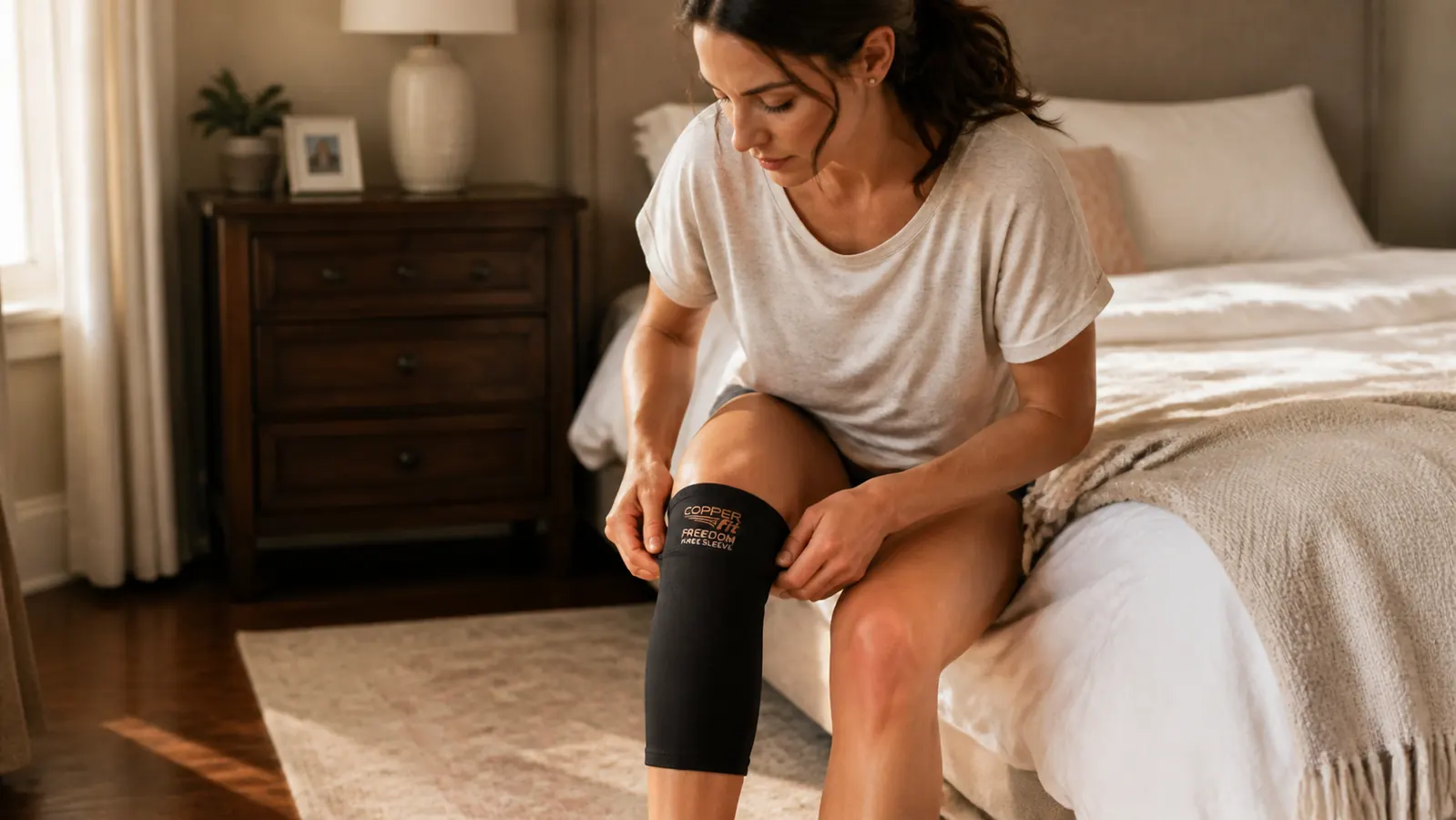
Month one: the sleeve became part of the getting-dressed routine. I wore it from the moment I got up until I changed into pajamas at night. At my desk job, wearing it through a full eight-hour day helped more than I expected. Sitting for long periods is genuinely hard on inflamed knees because the joint stiffens in a fixed position. The compression seemed to keep the joint just warm enough and just supported enough that standing up from my desk after a long call was less of a production. I stopped doing that thing where you brace both hands on the desk before you try to stand.
Month three: this was the honest plateau. The sleeve was not reducing my inflammatory arthritis. My psoriatic arthritis is an immune system problem and no sleeve fixes that. What it was doing was managing the mechanical discomfort on top of the inflammation, and by month three that distinction was clearer. On a low-inflammation day, the sleeve made the knee feel significantly better. On a genuine flare day, it helped some and not enough. I started pairing it with cold packs on bad mornings and that combination worked better than either one alone.
Month six: the sleeve still works. The fabric has pilled slightly around the inner knee where it rubs when I walk. After sweating in it during Cleo's afternoon walks, there is a faint metallic smell that washes out but comes back after the next workout. The silicone grip band is still doing its job. I have not had to replace it yet. For something at this price point that I have worn almost daily, the durability is honestly better than I expected.
The Morning Stiffness Case: Putting It On Right Out of Bed
This use case is specific to people with inflammatory arthritis and I think it is underrepresented in most reviews, which tend to come from people who wear compression for workouts. For PsA, RA, and lupus-related knee involvement, the worst part of many days is the first hour after waking. Synovial fluid sits in the joint overnight. Inflammatory markers peak in the early morning. The knee is stiff, swollen, and uncooperative until you move enough to warm it up.
Putting on the Copper Fit sleeve before that warm-up window accelerates the process noticeably. The graduated compression seems to help move fluid through the joint faster. I cannot give you a clinical explanation for this, but the experiential result is consistent: morning stiffness that used to last until 9:30 or 10 a.m. now clears by 8 a.m. on most days when I put the sleeve on immediately after getting up. That is a meaningful difference in a life where I need to be a functional human being at work by 8:30.
Morning stiffness that used to last until 9:30 now clears by 8 a.m. on most days when I put the sleeve on before I even make coffee. For someone with inflammatory arthritis, that hour back is real.
Wearing It Under Jeans: The Reality Test
This matters more than most reviewers admit. If you have arthritis in your 30s, you are probably going to work in real clothes. You are going to dinner. You are doing things that require you to look like a person who does not have a medical device strapped to their leg. The ability to wear this sleeve under jeans is a genuine feature, not a marketing bullet point.
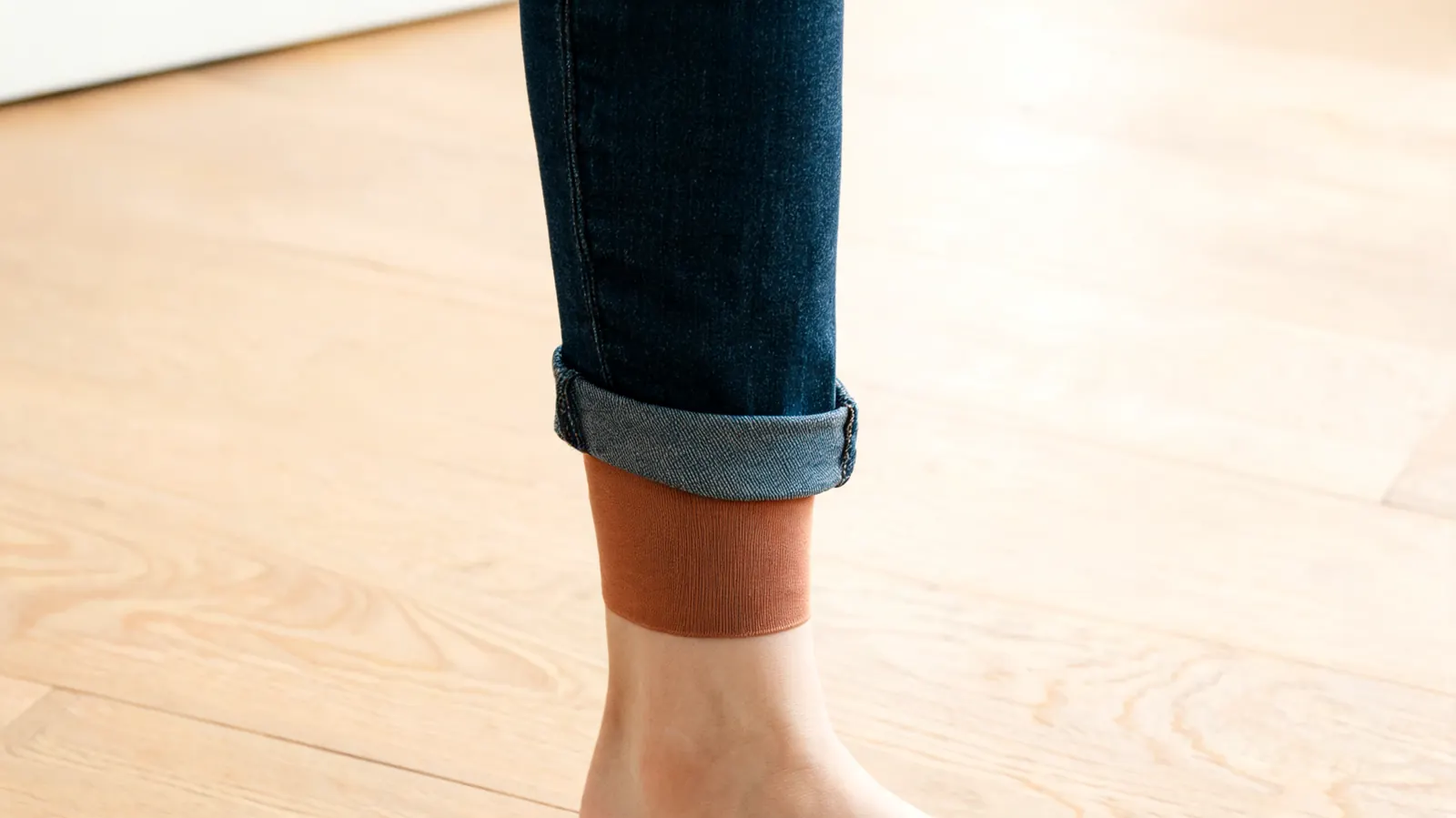
In a size large, the sleeve is slim enough to fit under most straight-leg and slim-fit jeans without creating a visible lump at the knee. The exception is very tight skinny jeans, where the compression on top of the denim gets uncomfortable by hour three. In regular straight-leg denim, I have worn it all day with no visible indication and no one has commented on anything unusual. The sleeve does add a thin layer of warmth under the fabric, which is actually welcome in winter and slightly uncomfortable in summer. In summer I switched to wearing it under wide-leg trousers and linen pants, which solved the heat problem entirely.
Who This Actually Helps: PsA Swelling, EDS, and Post-Meniscus Arthritis
I have PsA-driven knee swelling and the sleeve helps me most with the mechanical discomfort that rides on top of inflammation during lower-inflammation periods. But I have talked to people with different conditions who have different experiences with the same product.
For post-meniscus arthritis, the story is a little different. A friend of mine had a partial meniscectomy at 32 and has early post-surgical arthritis in the same knee. For her, the sleeve provides proprioceptive feedback that genuinely reduces pain during walking. The compression reminds the brain where the knee joint is in space, which seems to reduce the guarding and compensatory limping she does on bad days. Her experience is more consistently positive than mine because her condition responds more predictably to mechanical support.
For hypermobile EDS knees, the picture is more nuanced. A colleague with hEDS tried the Copper Fit sleeve and found the compression helpful for stability during walking and stair climbing, but insufficient for any kind of yoga or lateral movement. If your knees are hypermobile, a sleeve alone may not provide enough structural support and you may need to pair it with a more rigid brace for higher-demand activities. The Copper Fit works well for her on desk-job days and low-intensity movement; it is not enough for anything more dynamic.
Specific Scenarios: Stairs, Yoga, Gardening
My apartment building has four flights of stairs and no elevator. Before the sleeve became a daily habit, descending those stairs in the morning was the worst five minutes of my day. The eccentric loading of the quad on the way down compresses the already-inflamed joint and it hurts in a sharp, specific way. With the sleeve on, that descent is still uncomfortable on bad days, but it is no longer something I dread. The joint feels more contained. The pain is duller.
Yoga is a different challenge. Most beginner and moderate yoga poses are fine with the sleeve on. Child's pose, seated forward folds, low lunge: the sleeve stays in place and provides mild support. The problem is anything with a deep knee flexion, specifically Hero pose and full Malasana squat, where the sleeve bunches behind the knee and creates pressure on the popliteal fossa. I now take the sleeve off for yoga and put it back on afterward. The transition takes thirty seconds and is worth it.
Kneeling in the garden is where the sleeve earns its keep most dramatically. Kneeling on soil without a kneeling pad used to make my knee scream within two minutes. With the sleeve on and a thin foam kneeling pad under the knee, I can do twenty minutes of weeding without stopping. The compression keeps the joint from swelling reactively in response to the pressure. I still need the pad, but the sleeve changes kneeling from impossible to manageable.
The NSAID-Free Routine Question
This section is for people on biologics or DMARDs who have been told by their rheumatologist to minimize NSAIDs. I am on a DMARD and my doctor has asked me to keep ibuprofen use low because of the combined GI risk. This means I cannot rely on the standard "take two Advil and get on with your day" approach that most people without chronic conditions use for joint pain.
The Copper Fit sleeve has become a genuine part of my NSAID-reduction strategy. On days when I would previously have reached for ibuprofen to get through a morning meeting, I now frequently get by with the sleeve, a cold pack during my lunch break, and a heating pad in the evening. It does not work every time. On a genuine flare I still need medication. But for moderate discomfort on a medium day, mechanical support plus cold therapy displaces probably two or three ibuprofen tablets a week. That is meaningful over months and years on a DMARD.
Sizing: Order Up If You Have Inflammatory Swelling
The sizing chart on Amazon uses thigh circumference measured about four inches above the top of the kneecap. At 15 inches I was technically in medium, but with inflammatory fluid in the joint and normal quad muscle, the medium was uncomfortably tight at the top. My practical recommendation: if you have inflammatory arthritis with any visible knee swelling, order one size larger than the chart suggests. The sleeve runs true to size for athletic users without swelling, but inflammatory swelling adds circumference the chart doesn't account for.
The large gave me the right compression at the joint without cutting into the quad. If you are between sizes and have inflammatory swelling, go large. If you are between sizes with no swelling, go medium. Returning or exchanging on Amazon is straightforward; I had the replacement in three days. But saving yourself the two-week detour is worth knowing in advance.
Pros
- Measurable reduction in morning stiffness for inflammatory arthritis within the first week
- Slim enough to wear under straight-leg jeans all day without a visible lump
- Stays in place through an eight-hour desk day without constant readjusting
- Affordable enough that buying two so you always have a clean one is a reasonable option
- Good durability at six months of near-daily use, silicone grip band still functional
- Useful as part of an NSAID-reduction strategy for people on DMARDs or biologics
Cons
- Sizing runs small for anyone with inflammatory swelling, order one size up
- Develops a faint metallic copper smell after sweating that requires washing
- Fabric pills at the inner knee after extended daily use
- Too much bulk behind the knee for deep-flex yoga poses
- Provides mechanical support only, does not address underlying inflammation
Who This Is For
This sleeve is a good fit for you if you have inflammatory knee arthritis and your biggest daily problem is morning stiffness, prolonged sitting, or activities like stair climbing and light kneeling. It is also a good fit if you need something that looks invisible under regular clothes at a job that doesn't permit visible medical gear. If you are on a biologic or DMARD and trying to reduce incidental NSAID use, graduated knee compression is a reasonable tool to have in rotation. The Copper Fit Freedom sleeve at this price point is the easiest entry into that strategy.
It also works well for post-surgical arthritis where proprioceptive feedback reduces pain and compensatory movement, and for hypermobile EDS knees on low-demand days. For athletes or people doing high-intensity lateral movement, a more rigid brace is a better choice. But for the daily chronic arthritis grind, this sleeve covers a lot of ground at a very low cost.
Who Should Skip It
Skip this sleeve if your knee pain is primarily structural instability from ligament damage. Compression sleeves do not substitute for ligament support. If you have an ACL tear, a significant PCL injury, or valgus/varus instability, you need a hinged brace, not a compression sleeve. Wearing this instead of appropriate structural support could make things worse.
Also skip it if you have peripheral vascular disease, poor circulation in the legs, or active deep vein thrombosis risk. Compression in those cases requires a doctor's guidance on appropriate pressure levels. And if you have hypersensitivity to copper or copper-infused fabrics, the slight skin irritation from extended wear may not be worth the compression benefit. For everyone else with inflammatory knee arthritis in their 20s, 30s, or 40s who is looking for a daily-wear option that fits under regular clothes: this is a solid starting point.
If you want to understand how a sleeve compares to a wrapped ACE bandage for chronic inflammatory arthritis, I have a separate breakdown at Knee Compression Sleeve vs ACE Bandage for Arthritis. And if you are new to compression for arthritis and want to understand exactly why it helps, 10 Reasons a Knee Sleeve Helps Young Arthritis Sufferers covers the mechanism in plain language.
Six months in, I still put this on before I make coffee. That is the honest endorsement.
The Copper Fit Freedom Knee Sleeve is one of the few sub-fifteen-dollar items that has consistently earned its place in a morning routine built around managing inflammatory arthritis. If you have knee involvement from PsA, RA, EDS, or post-injury OA, it is worth trying at this price. Order one size larger than the chart suggests if you have any visible swelling.
Amazon Check Today's Price on Amazon →