
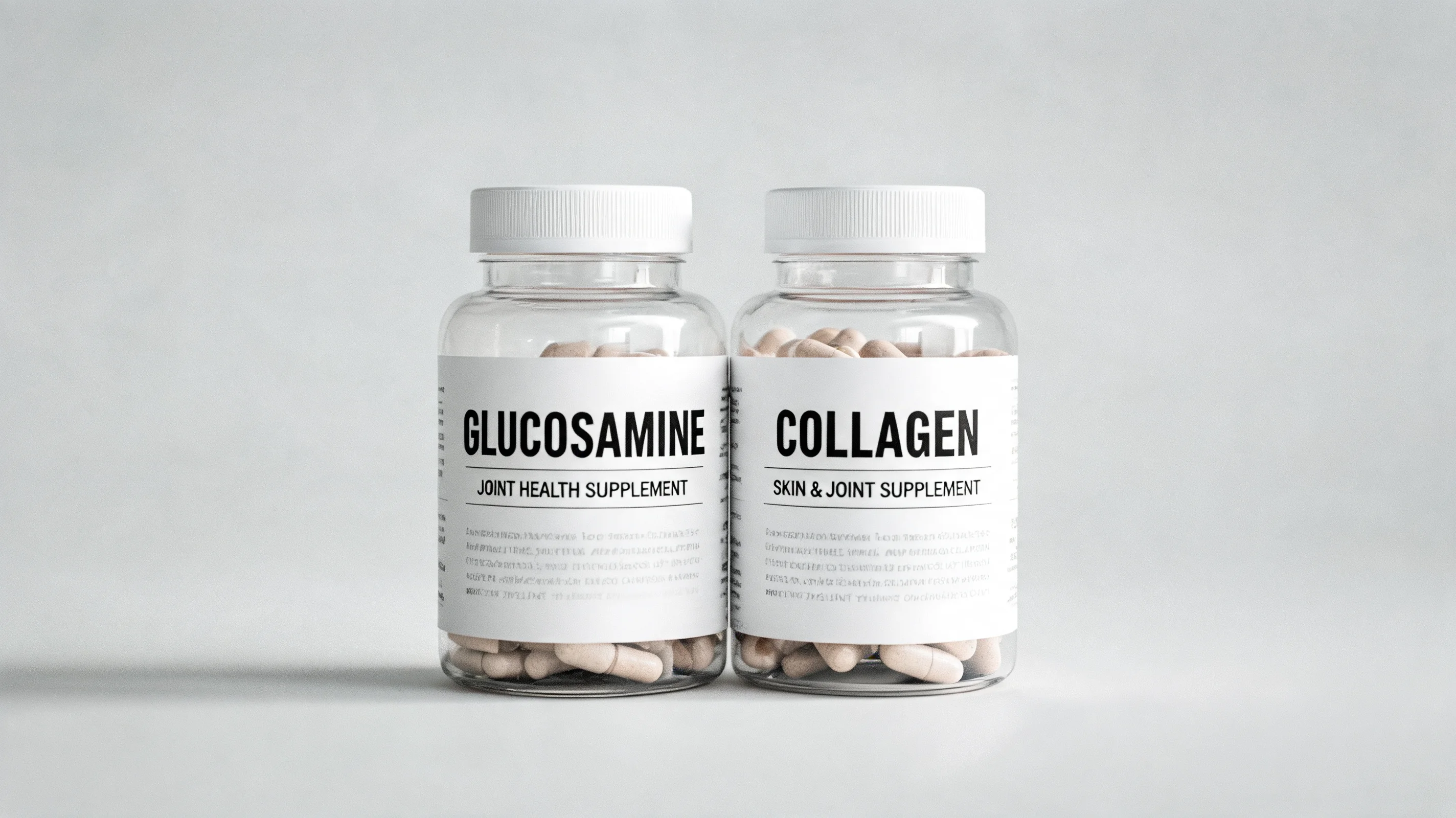
Glucosamine
Stimulates cartilage production and reduces inflammation directly in joint tissue. Best for osteoarthritis in knees and hips.
Check Performance Lab FlexCollagen Peptides
Provides the amino acid building blocks for cartilage, tendons, and ligaments. Best for overall joint integrity and connective tissue health.
Check Live Conscious CollagenThe Core Difference
Glucosamine is a compound your body already makes and uses to build and maintain cartilage. As you age, production slows. Supplementing is essentially topping off the supply and giving cartilage the raw material it needs to repair itself. The research on glucosamine for osteoarthritis is the most developed of any joint supplement, with multi-year clinical trials showing measurable effects on joint space narrowing (a structural marker of OA progression).
Collagen is a structural protein. When you take collagen peptides, you're providing the amino acids (glycine, proline, hydroxyproline) that are the literal building blocks of cartilage, tendons, and ligaments. The body absorbs these and routes them to connective tissue. It's not the same as eating steak: the hydrolysis process in collagen supplements breaks the proteins into small peptides that absorb intact and have been shown to stimulate collagen synthesis in cartilage cells.
What the Research Shows
Glucosamine
The GAIT trial (Glucosamine/Chondroitin Arthritis Intervention Trial), funded by the NIH, found glucosamine plus chondroitin significantly reduced pain in people with moderate-to-severe knee OA. Subsequent studies have confirmed effects on inflammation markers and on joint space preservation over 2+ years. The form matters: glucosamine sulfate consistently outperforms glucosamine HCl in head-to-head trials.
Collagen
Research on collagen peptides for joints is newer but growing. A 2016 study in the Journal of Agricultural and Food Chemistry found that collagen peptides reduced OA symptoms significantly versus placebo. A 24-week Penn State study found athletes taking collagen had measurable improvements in joint comfort during activity. The effect is real, just not as deeply studied as glucosamine.
Who Should Take Which
Take Glucosamine If...
You have diagnosed osteoarthritis, particularly in the knees or hips. You want the most evidence-backed joint supplement. You're looking for an effect on cartilage loss and structural joint health over time.
Take Collagen If...
You want to support connective tissue broadly (tendons, ligaments, skin as well as joints). You're active and experiencing joint discomfort during activity. You're younger and want to support joint health proactively before significant OA develops.
Can You Take Both?
Yes, and the mechanisms are complementary rather than redundant. Glucosamine works on cartilage maintenance and inflammation. Collagen works on cartilage building blocks and broader connective tissue support. The best joint supplement stacks (like Performance Lab Flex) include both because they address the problem from different angles.
The Practical Answer
For most people with osteoarthritis, start with a quality glucosamine sulfate supplement (at 1,500mg/day). Add collagen peptides if you want broader connective tissue support or if you're still active and want to protect the joints you have.
Try Performance Lab Flex (includes both)