
If you have RA, psoriatic arthritis, lupus, or EDS and someone has already told you to try turmeric, you've probably tried it. You bought a jar of grocery-store turmeric powder, maybe stirred it into tea for two weeks, felt approximately nothing, and moved on. I did the same thing at 27, right after my rheumatologist diagnosed me with RA and handed me a pamphlet about anti-inflammatory diet options. That pamphlet might as well have said 'good luck.' What it didn't tell me is that plain turmeric powder from a spice aisle is nearly useless as a supplement. The curcumin inside it, the compound that actually does the work, has about 1% bioavailability on its own. Your body absorbs almost none of it before it clears your gut.
The protocol I'm walking you through below is different. It's based on high-absorption curcumin, timed correctly, paired with the right foods and a complementary supplement, with a measurable endpoint so you can actually know whether it's working. It won't replace your DMARD or biologic. It's not supposed to. But as a daily adjunct for background inflammation, especially in the 20s-to-40s crowd who've been told their pain isn't real or isn't that bad, it's one of the more evidence-backed tools available without a prescription.
Plain turmeric powder didn't work because your body couldn't absorb it. This one has BioPerine.
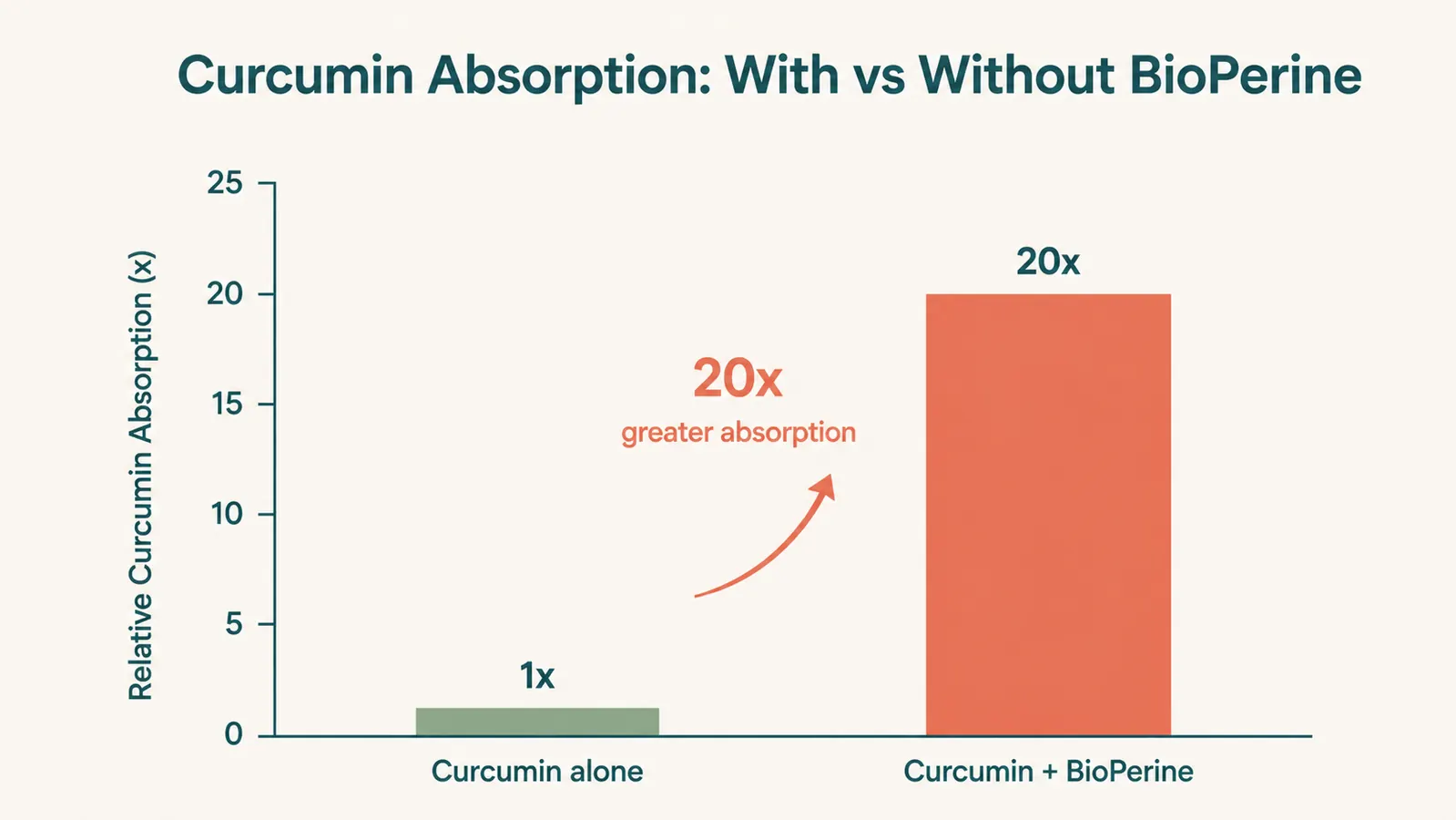
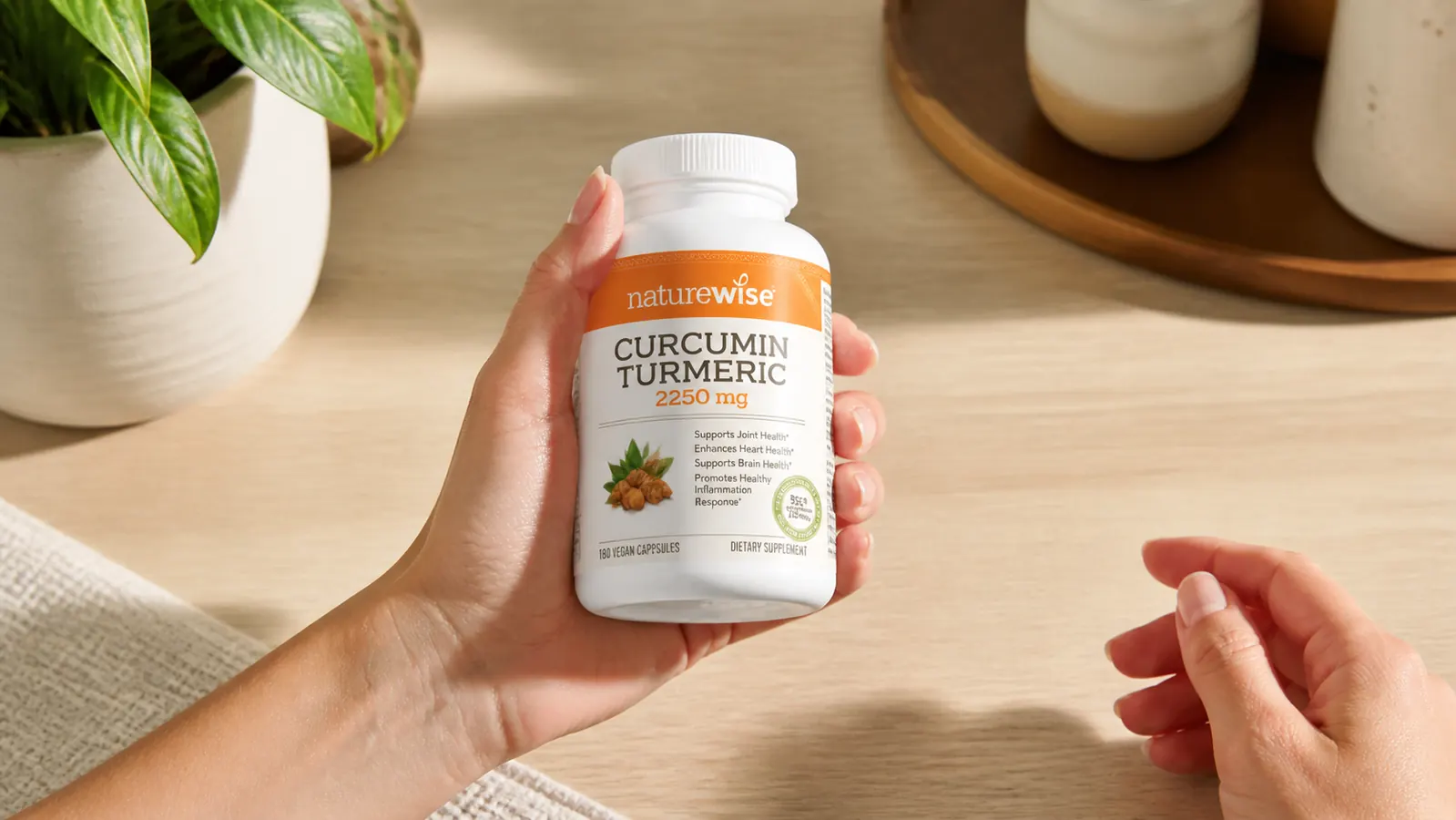
NatureWise Curcumin Turmeric 2250mg delivers 95% curcuminoids plus BioPerine black pepper extract, which research shows increases curcumin absorption by up to 2000%. Rated 4.6 stars across more than 58,000 reviews.
Amazon Check Today's Price on Amazon →Step 1: Talk to Your Rheumatologist Before You Start
This is not the usual legal boilerplate. It's genuinely important for autoimmune patients. Curcumin has mild blood-thinning properties, which matters if you're on anticoagulants or scheduled for infusion therapy. More specifically, if you're on methotrexate, there's an open question in the literature about whether high-dose curcumin affects the liver load. Most rheumatologists will say it's fine at standard doses, but you want that conversation on record and you want them to know what you're taking before your next hepatic panel.
The practical ask is simple: bring the bottle to your next appointment, or send a message through your patient portal before you start. Something like: 'I'm planning to add NatureWise Curcumin Turmeric 2250mg to my daily routine. I'm currently on [medications]. Any concerns I should know about?' Most rheumatologists will respond within a day or two and most will say go ahead. But skipping this step, especially on methotrexate, is not worth it.
Step 2: Choose a Curcumin Supplement With Real Absorption Technology
The bioavailability problem is the single reason most people write off turmeric and never try it again. Curcumin is fat-soluble and highly unstable in the gut. In its raw form, the vast majority is excreted before it can enter systemic circulation and reach inflamed tissue. Studies on raw curcumin absorption are genuinely discouraging. You'd need to eat an unrealistic amount of turmeric paste daily to see any measurable serum level.
Three technologies solve this: piperine (BioPerine), the black pepper extract that slows curcumin metabolism and boosts absorption by roughly 2000% according to a widely-cited 1998 study in Planta Medica; phospholipid complexes (Meriva, Phytosome) that bind curcumin to lecithin for better cellular uptake; and nano-emulsification or micellar delivery. BioPerine-enhanced formulas are the most common, well-studied, and affordable entry point. NatureWise Curcumin Turmeric 2250mg uses BioPerine at 5mg per serving, which puts it in line with the dose used in absorption research. If a label doesn't list BioPerine, piperine, a phospholipid complex, or another named delivery technology, the odds are high you're buying expensive spice powder.
Step 3: Understand What 2250mg Actually Means and How to Take It
The NatureWise label says 2250mg per serving and three capsules per serving. In practice, many people with RA or psoriatic arthritis take two capsules per day rather than three, which puts them at approximately 1500mg. Both are reasonable starting points. The research on curcumin dosing for inflammatory conditions generally uses 1000mg to 1500mg of curcuminoids per day, not total turmeric weight. The '95% curcuminoids' standardization on NatureWise means the active fraction is high, so 1500mg of this formula delivers a meaningful curcuminoid dose even at the two-capsule level.
Start with two capsules taken together with your largest meal of the day. Give it four to six weeks before adding a third. The common mistake is starting at three capsules on an empty stomach, getting GI upset on day two, and concluding that curcumin doesn't agree with you. It doesn't agree with your stomach when taken without food. That's a dosing error, not a product problem, and Step 8 covers it in more detail.
Step 4: Always Take It With Dietary Fat
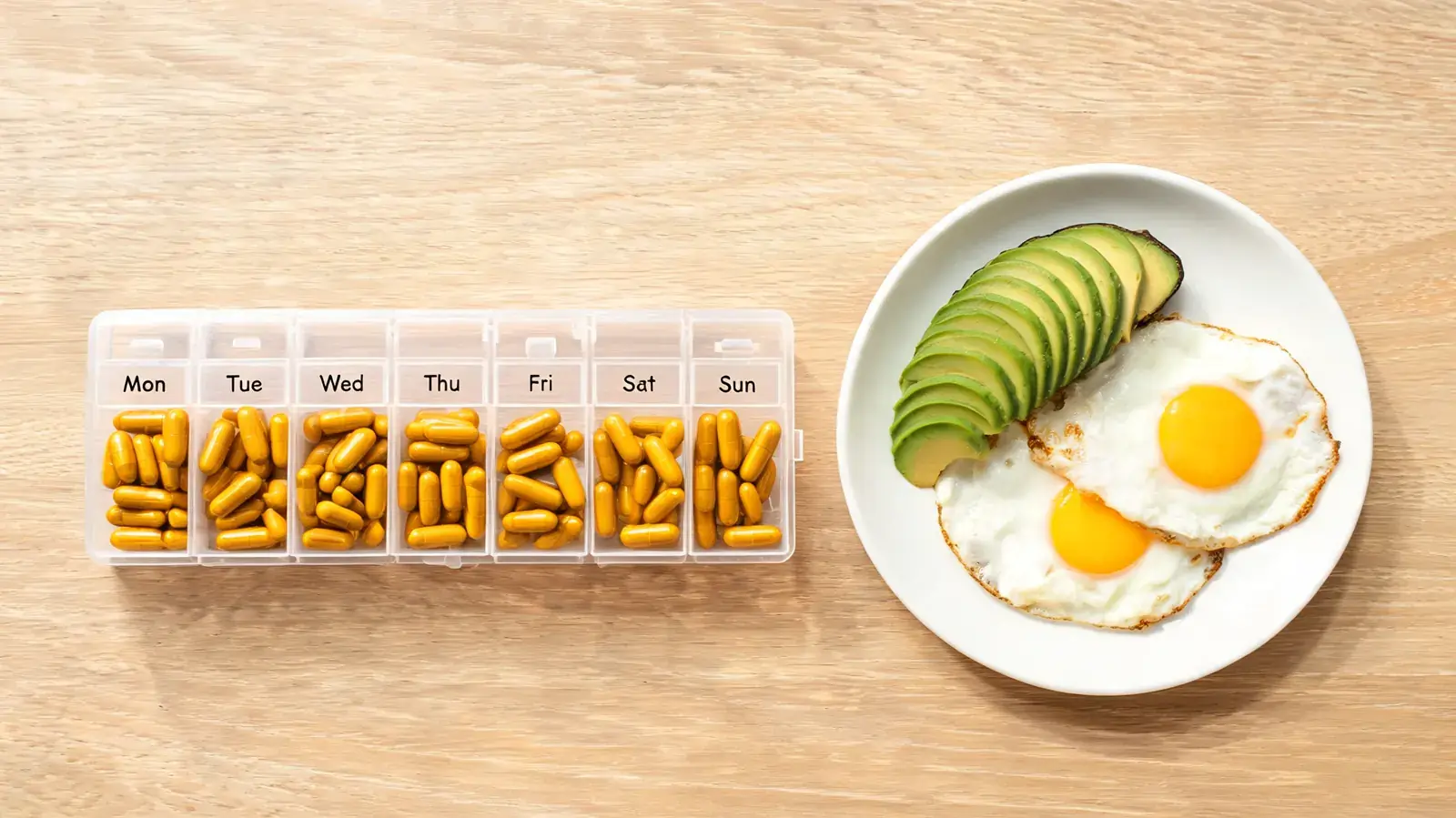
Curcumin is fat-soluble. This is not optional fine print. Without fat present in the gut at the time of absorption, even a BioPerine-enhanced formula will underperform. The practical implication is that you shouldn't take your curcumin capsules with black coffee and nothing else. The ideal scenario is a small meal that includes at least one fat source: half an avocado, two eggs cooked in olive oil, a handful of nuts, a tablespoon of nut butter on toast, full-fat yogurt. You don't need a large meal. You need fat present.
Mornings tend to work well for most people because breakfast is easy to build around eggs or avocado. It also keeps the supplement in your daily routine rather than as an afterthought at dinner when you might forget. If mornings are chaotic for you, lunch works just as well. The key is consistency, not the specific time of day.
Step 5: Add an Omega-3 Supplement for Synergy on the Inflammatory Pathway
Curcumin's primary mechanism is inhibition of NF-kB, a transcription factor that drives the production of pro-inflammatory cytokines including TNF-alpha, IL-1, and IL-6. These are the same pathways that biologics and JAK inhibitors target at a much more aggressive level. Omega-3 fatty acids, specifically EPA and DHA from fish oil, work upstream on a complementary pathway by reducing the arachidonic acid precursors that feed prostaglandin and leukotriene production. Taking both together is not doubling down on one mechanism. It's hitting two distinct inflammatory pathways simultaneously.
A reasonable starting point for omega-3 is 2g of combined EPA and DHA per day. That's typically two to three standard fish oil capsules depending on concentration. Look for a product with at least 500mg of combined EPA and DHA per capsule. Nordic Naturals, Carlson, and Thorne are all solid options. Take fish oil with the same fatty meal as your curcumin. The fat content of the meal also benefits fish oil absorption, so you're getting double duty from your breakfast avocado.
Curcumin and omega-3 hit two different inflammatory pathways. One without the other is leaving half the protocol on the table. You don't need to spend a lot. You need to be consistent.
Step 6: Track Your CRP at Week Zero and Week Eight
This step is for the skeptics, which is most of us. After years of being dismissed for our age, or trying supplements that did nothing, or being told the pain is stress or anxiety or just part of being young and busy, it is deeply satisfying to have a number. C-reactive protein (CRP) is a blood marker of systemic inflammation. It's not perfect, and it doesn't capture every kind of inflammatory activity, but it's inexpensive, widely ordered, and moves in a measurable direction when anti-inflammatory interventions are working.
Ask your rheumatologist to include a high-sensitivity CRP (hsCRP) on your next blood draw before you start the curcumin and omega-3 protocol. Then at your follow-up, around the eight-week mark, have it drawn again. Some people see a meaningful drop. Others see minimal change because their inflammation is primarily synovial rather than systemic. Either result is information. If your rheumatologist is skeptical about curcumin, bringing them a before-and-after hsCRP is the most productive possible conversation to have.
Step 7: Keep Your Flare Medications Separate From This Protocol
Curcumin is preventative and adjunctive. It is not a flare treatment. If you're in the middle of an active flare, reaching for your curcumin capsules instead of your prescribed NSAID or steroid burst is not the right call. The inflammatory cascade during a flare is moving faster than any supplement can counter. Your prescribed rescue medications exist for this reason and you should use them without guilt.
What curcumin may help with is the background, day-to-day inflammatory load that accumulates between flares. Think of it as keeping the baseline lower so that flares hit less hard or less often. That's a modest but meaningful claim and it's consistent with what the research shows. It's not a replacement for disease-modifying therapy. It's a reasonable daily habit for the quiet days between the bad ones.
Step 8: Watch for GI Upset and Adjust If Needed
A small percentage of people experience nausea, loose stools, or general GI discomfort when starting curcumin. This is most common when capsules are taken on an empty stomach or at a higher starting dose. The fix is almost always one of two things: taking the capsules with a larger meal, or dropping to one capsule for the first two weeks before working up. If you experience ongoing GI issues even with food, a phospholipid complex formulation such as Meriva may be gentler on the digestive tract than a BioPerine-based product.
Worth noting: curcumin can give urine a slightly yellow tint at higher doses. This is harmless and expected. It's also a useful sign that absorption is happening. If you're already on a medication that affects liver enzymes, mention the curcumin to your pharmacist and ask about monitoring frequency. The interaction risk is low but it's not zero, and the pharmacist conversation takes five minutes.
What Else Helps
The protocol above is a standalone starting point, but curcumin works best as part of a broader anti-inflammatory approach. Consistent sleep matters more than most supplements. Getting seven to eight hours reduces cortisol-driven inflammation in ways no pill can replicate. Movement that doesn't crash a flare, think walking, swimming, or seated resistance work on low-inflammation days, keeps synovial fluid circulating and reduces morning stiffness. Diet patterns that minimize refined sugar and ultra-processed food reduce the same NF-kB pathways that curcumin targets, so the two approaches compound each other rather than duplicate effort.
If you want a deeper look at how NatureWise Curcumin performs over months of consistent use with an autoimmune condition specifically, the review at this site covers eight months of daily use with RA: NatureWise Curcumin Review: 8 Months of Daily Use Living With RA in My 30s. And if you want the research case for why curcumin is worth the effort specifically for younger inflammatory arthritis patients, rather than the senior-citizen joint-pain framing you usually see, 10 Reasons Turmeric Curcumin Actually Helps Young People With Inflammatory Arthritis covers each mechanism.
You have the protocol. Now get the tool that actually absorbs.
NatureWise Curcumin Turmeric 2250mg with 95% curcuminoids and BioPerine. Take two capsules with a fatty meal each morning. Give it eight weeks. Track your CRP. That's the whole system.
Amazon Check Today's Price on Amazon →