

I want to say something upfront that the Amazon listing absolutely will not say: the copper in this sleeve is not doing what you think it is. The 23,000 reviews mostly come from runners, weekend warriors, and people who sprained something at a birthday party. That is not my world, and probably not yours either. My knee pain is chronic. It is autoimmune. Some mornings my knee is stiff before I have even stood up, and no amount of warming up fixes that. So when I tell you what this sleeve actually does, I am talking about wearing it five days a week with inflammatory arthritis, not recovering from a sports injury. I have worn this Copper Fit Freedom Knee Sleeve almost daily for six months as someone in my early 30s with psoriatic arthritis, and what follows is the unvarnished version of what works and what doesn't.
There are real things to like here and real things that will annoy you. I am going to cover both, because if you have RA, psoriatic arthritis, gout flares, or any other inflammatory joint condition, you deserve an honest answer before you spend money on something that might not fit your situation at all.
Quick Verdict
Genuinely useful for daily-wear inflammatory arthritis stiffness, but the copper marketing is noise, sizing runs small for athletic builds, and it is not a substitute for a real brace if your rheum or PT prescribed one.
Amazon Check Today's Price →If you have daily-wear stiffness from inflammatory arthritis, this is worth trying at current price.
The Copper Fit Freedom Knee Sleeve is one of the most affordable compression options that actually holds graduated pressure without being miserable to put on. Just order one size up if your quads are muscular.
Amazon Check Today's Price on Amazon → →Let's Talk About the Copper Claim
This is the thing that bothers me most about the marketing, and I want to be direct about it so you can make a clear decision. Copper-infused compression fabric has been studied, and the evidence for copper itself having any therapeutic effect on joint inflammation is genuinely weak. The metal does not penetrate skin at levels that would affect your synovial tissue. The mechanism that is actually helping your knee is the compression, not the copper. The copper is a marketing hook. It is what lets a company say their product is different from every other stretchy sleeve on the planet.
That does not make the sleeve bad. It makes the name misleading. The fabric itself is a nylon and spandex blend that provides consistent graduated compression from just below the kneecap down to mid-calf, and that compression is real and it does do something useful. But if you are buying it specifically because copper is supposed to heal inflammation, you are paying for a story, not a mechanism. The compression is the mechanism.
I say this not to be harsh but because people in our community have been sold false claims their whole lives. You deserve to know what you are actually buying.
Sizing: The Problem Nobody Mentions Until You Are Stuck With the Wrong One
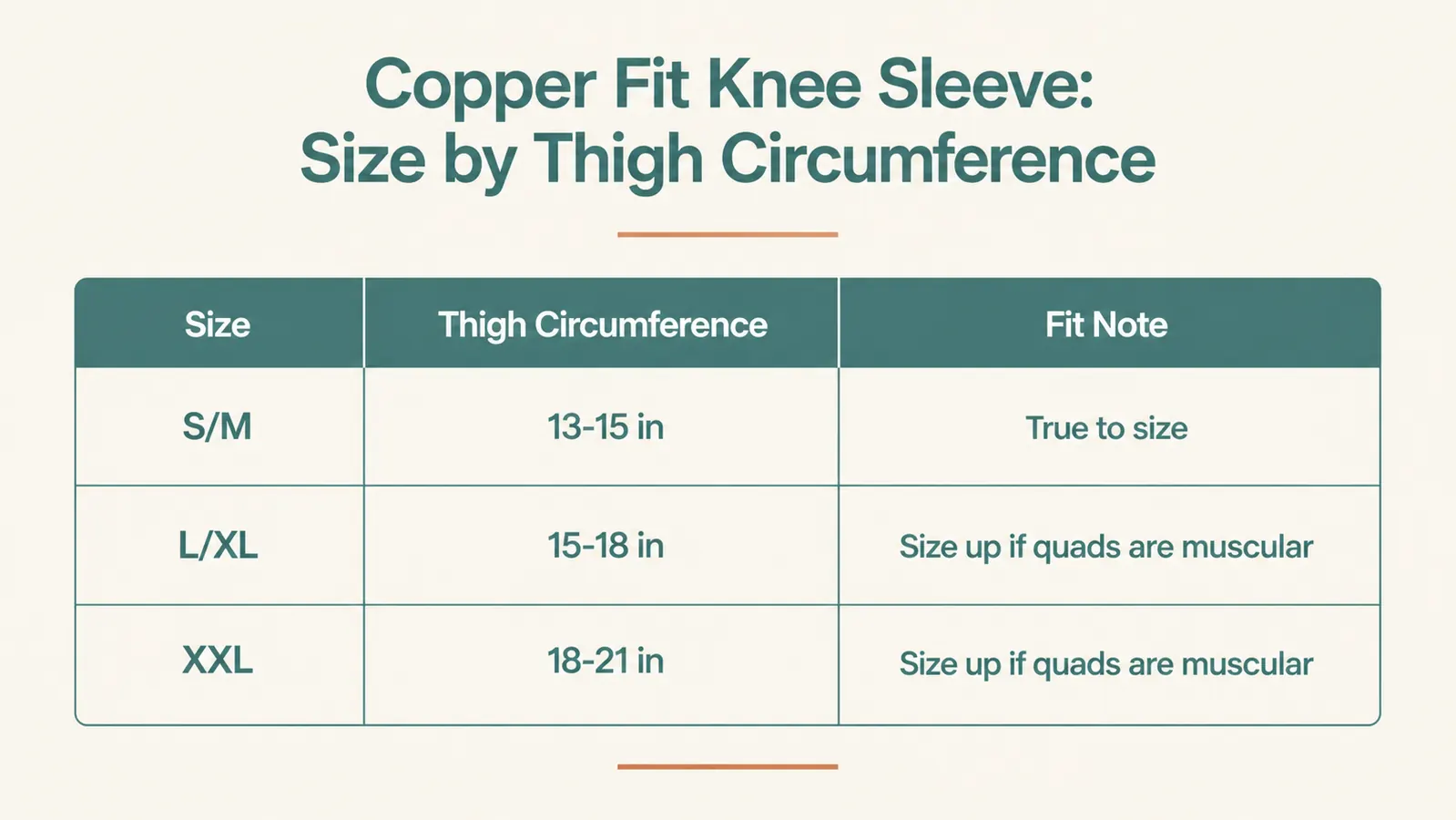
The Copper Fit sizing chart is based on thigh circumference, and it is designed for average proportions. If you have any muscle mass in your quads, which many of us do even if we do not feel athletic, the sleeve will fit tight at the top and feel restrictive at the thigh while sitting loose at the knee. That is the opposite of what you want. You want the compression centered on the joint, not cutting into your lower thigh.
My honest advice: if your thighs are anywhere near the upper end of a size range, order one size up. The sleeve runs small for anyone with muscular legs, and that includes people who walk a lot, people who do any kind of physical therapy, and people who carry extra weight around the thighs. The medium-to-large boundary is the most common problem zone. If you are on that line, go larger. You can always add a layer of athletic tape to snug up a slightly loose fit at the calf. You cannot undo the discomfort of a sleeve that is strangling your thigh all day.
It Will Slip Down During a Long Walk. Here Is How to Prevent It.
After about forty minutes of continuous walking, this sleeve migrates. The bottom edge creeps down toward the ankle and the top edge folds, which means the compression zone shifts away from the knee. This is a known issue with knit compression sleeves across most brands at this price point, and Copper Fit is not uniquely bad at it, but it is worth knowing before you use this sleeve for something like a full day of light activity or a longer errand run.
There are two fixes that actually work. First, make sure the sleeve is completely dry when you put it on. A slightly damp sleeve from sweat or the laundry has almost no grip. Second, put it on when your leg is warm and the skin is slightly sticky, not right after a shower when everything is smooth. Some people use a small strip of medical-grade tape at the top cuff to anchor it to the thigh. That sounds fussy but takes about ten seconds and solves the problem completely. If you are using this sleeve for a long walk or a work shift on your feet, that tape trick is worth knowing.
The compression is real. The copper is marketing. Knowing the difference is what lets you buy this for the right reasons and actually get something out of it.
The Smell Issue: Yes, It Happens, and Here Is How to Deal With It
Copper-infused synthetic fabric absorbs sweat and, after a few weeks of daily wear, it will start to hold odor even after washing. This is not unique to Copper Fit. It is a property of any nylon-spandex blend worn against skin for extended periods. The copper does have mild antimicrobial properties, so it takes longer than a plain nylon sleeve to develop smell, but it gets there.
The washing instructions on the sleeve say cold water, gentle cycle, air dry. That is correct. Do not put it in the dryer. Heat breaks down the spandex and kills the compression faster than anything else. For odor, a thirty-minute soak in cold water with a small amount of white vinegar before the wash cycle will reset the fabric. Do this once every couple of weeks if you are wearing the sleeve daily. It extends the life of the sleeve noticeably and keeps the smell from building up into something that bothers you or anyone near you.
Plan on replacing the sleeve every four to six months with daily wear. The compression will gradually loosen before you fully notice it has happened. If you find yourself pulling the sleeve up more often than you used to, that is the signal.
What It Actually Does for Inflammatory Arthritis (The Part Worth Reading)
Here is the honest answer for the people this site is actually written for. If you have gout, rheumatoid arthritis, psoriatic arthritis, or any other condition that produces inflammatory knee stiffness, this sleeve does two things that matter. First, it provides consistent warmth to the joint. Warmth from compression is different from the surface warmth of a heating pad. It is sustained throughout movement, which means your joint stays looser during activity rather than tightening back up after five minutes away from the pad. For morning stiffness in particular, putting this sleeve on before you get out of bed and wearing it through the first hour of your day makes a meaningful difference in how fast you loosen up.
Second, it gives your knee proprioceptive feedback. That is a clinical term for the fact that the sleeve is telling your nervous system where your knee is in space at all times. When you have inflammatory joint damage, even mild, your proprioceptive feedback gets disrupted. Compressed fabric restores some of that signal. You feel more stable and more confident in the joint, which means you move differently, which means you load the knee more evenly, which over time reduces the micro-trauma that feeds a low-grade inflammatory cycle. This is actually the most underrated thing compression does for autoimmune joint conditions, and almost no one talks about it.
This Is Not a Brace. Please Do Not Treat It Like One.
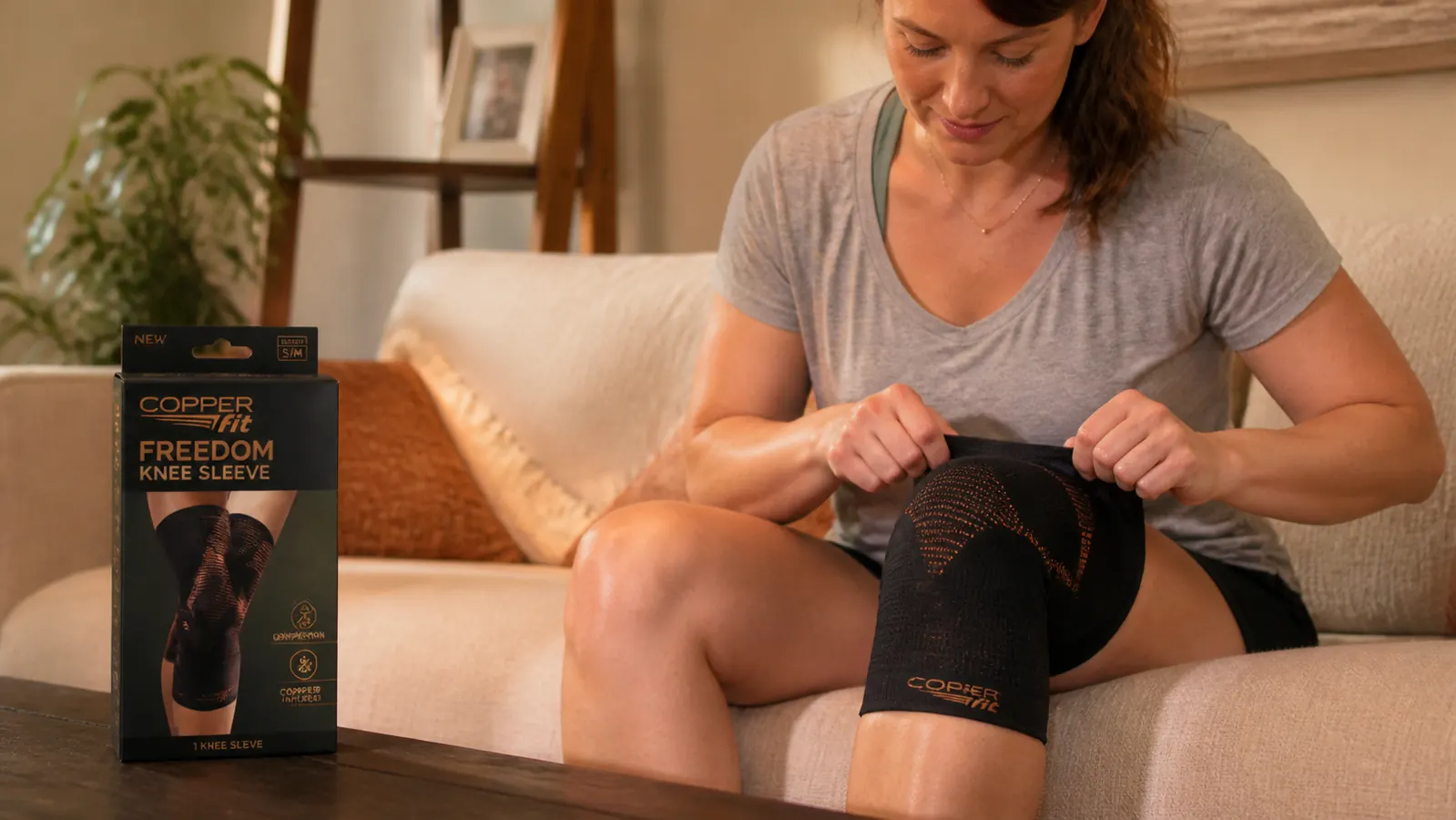
If your rheumatologist, orthopedist, or physical therapist has recommended a structured knee brace, a hinged brace, or any kind of immobilizing support for ACL instability, meniscus damage, or significant cartilage loss, this sleeve does not replace that. A compression sleeve provides warmth and proprioceptive feedback. It does not provide lateral stability or prevent hyperextension. If your knee buckles, if you have been told you have structural instability, or if you are recovering from any kind of knee surgery, please use what your care team prescribed.
The Copper Fit sleeve is appropriate for daily-wear management of inflammatory stiffness when your joint structure is intact or when your medical team has cleared you for compression only. It is not appropriate as a workaround for a brace you have been told you need. That distinction matters a lot and I want to be direct about it.
The Invisible Factor: It Actually Disappears Under Jeans
I want to spend a moment on this because it is genuinely more important to my daily life than any of the clinical stuff above. When you have chronic knee pain and you are in your twenties or thirties, the last thing you want is to look like you are injured. You do not want people asking what happened. You do not want to explain your autoimmune condition to a coworker in a hallway. You do not want to look like the person who needs a handicapped parking placard before forty.
The Copper Fit sleeve is thin enough to wear under regular jeans without creating a visible lump at the knee. With straight-leg or slim jeans it pulls the fabric tight but does not show a ridge. With relaxed jeans it is completely invisible. I have worn it to work, to dinner, to a family event where I definitely did not want to answer questions about my health, and nobody knew it was there. That matters more than I can adequately explain to anyone who has not spent years managing a chronic condition while trying to look like they are not.

Pros
- Genuine warmth-through-compression that helps morning inflammatory stiffness
- Slim profile fits under jeans without visible lump
- Affordable enough to own two so you always have a clean one ready
- Copper antimicrobial fabric delays odor compared to plain nylon sleeves
- Good proprioceptive feedback for inflammatory joint instability during low-impact activity
- Graduated compression stays consistent through normal daily movement
Cons
- Copper claim is marketing, not mechanism. The compression does the work.
- Runs small for athletic or muscular builds. Order one size up.
- Slides down during walks longer than 30-40 minutes without tape anchor at the cuff
- Smell builds up with daily wear. Requires vinegar soaks to reset fabric.
- No lateral support. Not appropriate if a structured brace has been recommended by your care team.
- Spandex degrades with heat. Machine drying kills it fast.
Who This Is For
You will get real value from this sleeve if you have chronic inflammatory knee arthritis, your joint structure is intact or your care team has cleared you for compression only, you are looking for something that manages daily stiffness and warmth without looking medical, and you are willing to size up if your thighs are muscular. It is also a genuinely good option if you want to keep one sleeve at work and one at home without spending much. For gout flares in the recovery phase, RA morning stiffness, psoriatic arthritis daily-wear maintenance, and hypermobility conditions where proprioceptive feedback helps, this is a reasonable and affordable tool.
Who Should Skip It
Skip it if your rheumatologist or PT has recommended a real brace for structural reasons. Skip it if you believe the copper itself is doing therapeutic work, because that expectation will lead to disappointment when inflammation flares anyway. Skip it if you need lateral stability during higher-impact activity. And skip it if you are unwilling to hand-wash and air-dry it, because the sleeve will degrade fast with heat and the compression will be gone within a month of machine drying. This is a maintenance tool for people who already understand their condition. It is not a treatment.
If you want more detail on how to actually use compression as part of a full workday pain management routine, the guide on managing knee arthritis pain at work covers the practical side of that in detail. And if you want the long-term wear perspective with different angles on fit and usage, the six-month review from an arthritis-in-your-30s perspective is worth reading alongside this one.
Daily-wear stiffness from inflammatory arthritis is exactly what this sleeve was quietly good at all along.
At current price, it is affordable enough to try without much risk. Order one size up from your usual if your quads have any muscle at all. Air dry it. Use the vinegar trick after two weeks of daily wear. It will last.
Amazon Check Today's Price on Amazon → →